
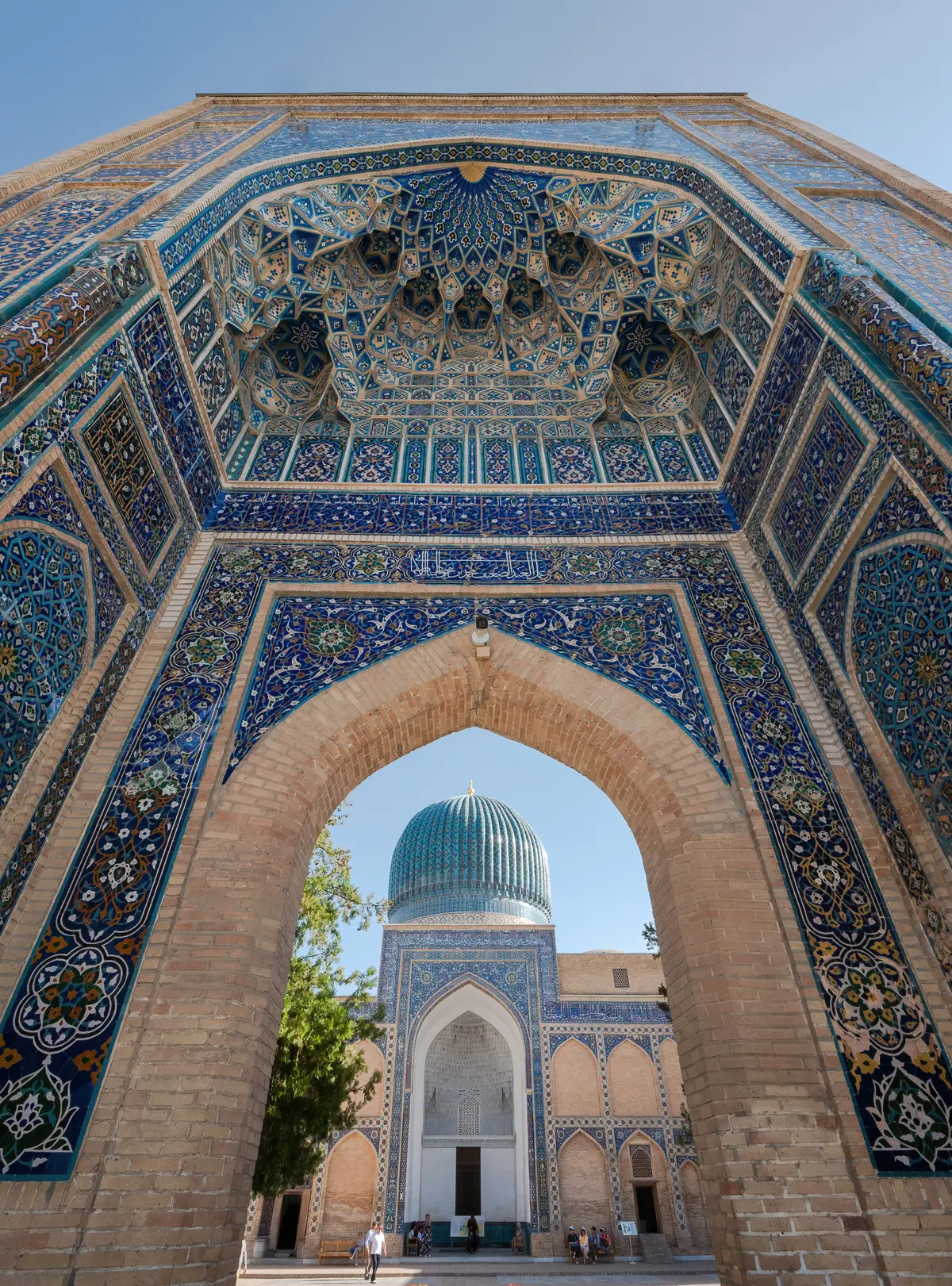
Samarkand, Samarkand, Central Asia, Uzbekistan
Mausoleum · Timurid · 15th Century
Gur-e-Amir is a mausoleum of the Asian conqueror Timur (also known as Tamerlane) in Samarkand, Uzbekistan. It occupies an important place in the history of Persian-Mongolian Architecture as the precursor and model for later great Mughal architecture tombs, including the Taj Mahal in Agra, India.
Construction: 1403 – 1404
Founder: Timur (Tamerlane)
Key figures: Timur, Ulugh Beg
Significance: The tomb of the Asian conqueror Timur and his descendants. A precursor to the Taj Mahal.
- 1403: Construction ordered by Timur
- 1405: Timur buried here
Architectural styles: Timurid, Persian
Architects: Muhammad ibn Mahmud Isfahani
Materials: Brick, Blue Tiles, Gold
- Ribbed Dome: A massive fluted azure dome.
- Interior: Lavishly decorated with gold, jade, and onyx.
- Crypt: Actual graves located in the crypt below.
Opening hours: 08:00 - 19:00 (summer) · 09:00 - 17:00 (winter) – Ticket required.
- General: €3.00
Accessibility: Accessible.
Official site: https://en.wikipedia.org/wiki/Gur-i_Amir_Mausoleum
Address: Oksaroy St, 1, Samarkand, Uzbekistan
Coordinates: 39.6482, 66.9692