
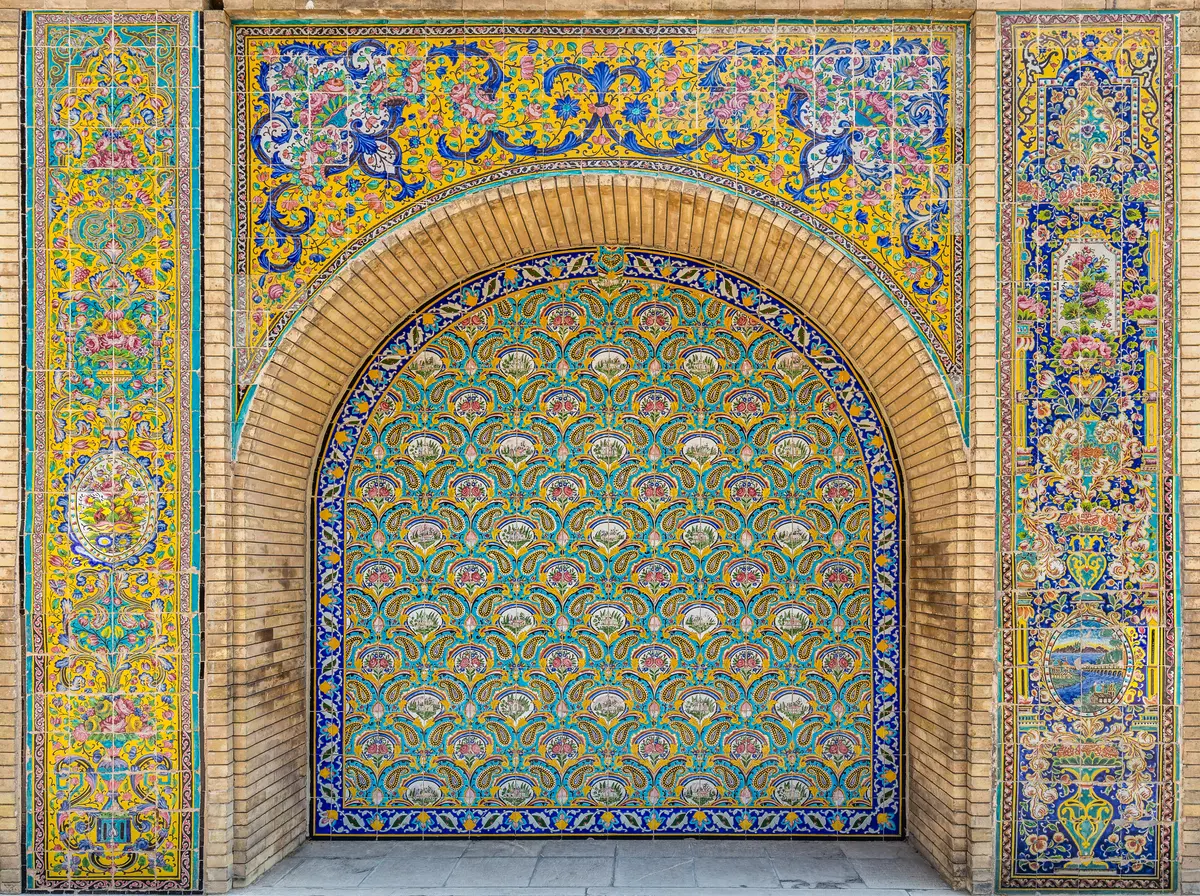
Tehran, Tehran Province, Central Iran, Iran
Palace · Qajar · 18th-19th Century
The Golestan Palace is the former royal Qajar complex in Iran's capital city, Tehran. One of the oldest historic monuments in the city of Tehran, and of world heritage status, the Golestan Palace belongs to a group of royal buildings that were once enclosed within the mud-thatched walls of Tehran's Historic Arg (citadel). It consists of beautiful gardens, royal buildings, and collections of Iranian crafts and European presents from the 18th and 19th centuries.
Construction: 1524 – 1865
Founder: Tahmasp I
Key figures: Karim Khan Zand, Agha Mohammad Khan Qajar, Naser al-Din Shah Qajar
Significance: A masterpiece of the Qajar era, embodying the successful integration of earlier Persian crafts and architecture with Western influences.
- 1524: Initial construction during the Safavid dynasty
- 1765: Renovated by Karim Khan Zand
- 1865: Rebuilt to its current form by Haji Abol-hasan Mimar Navai for Naser al-Din Shah
- 2013: Inscribed as a UNESCO World Heritage Site
Architectural styles: Persian, Qajar, European touches
Architects: Haji Abol-hasan Mimar Navai
Materials: Brick, Tile, Marble, Mirror
- Marble Throne (Takht-e Marmar): A spectacular terrace built in 1806, featuring yellow Yazd marble.
- Shams-ol-Emareh: Edifice of the Sun, blending Persian and European architecture.
- Mirror Hall (Talar-e Aineh): Famous for its extraordinary mirror work and illumination.
Opening hours: 09:00 - 19:00 (summer) · 09:00 - 17:00 (winter) – Open daily.
- Foreigner: €10.00
Accessibility: Accessible in most areas, but some historical rooms have steps.
Official site: http://www.golestanpalace.ir/
Address: Tehran, District 12, Panzdah-e-Khordad St, Arg Sq, Iran
Coordinates: 35.6796, 51.4204